Navy Strength Gin · Blanc Vermouth · Scuppernong Cordial · Muscadine · Luxardo Bitter Bianco
Recipe by Miles Macquarrie / @lois_must_die, Kimball House, Atlanta
The Negroni is one of the few cocktails in history that has spawned an entire family of variations based on systematic substitution: swap Campari for Aperol and you get a Spritz; swap sweet vermouth for blanc vermouth and you begin approaching the White Negroni territory. Macquarrie's version takes the White Negroni framework (gin, blanc vermouth, white bitter) and introduces the scuppernong grape twice, once as cordial and once as muscadine wine, grounding a French-Italian template in Georgia terroir.
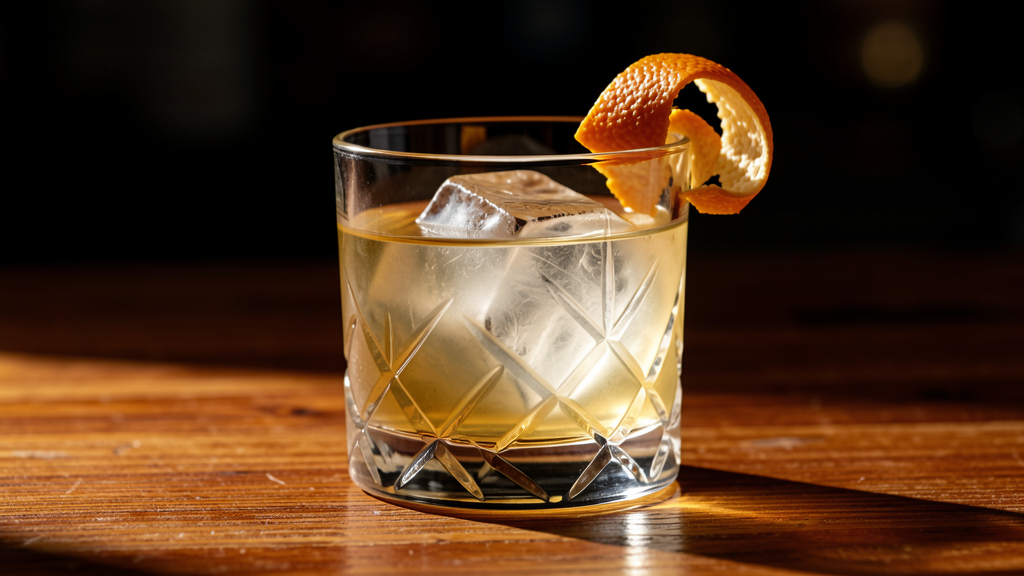
Unlike the Enzoni Bianco, this drink is stirred. No citrus, no need to shake. The Comoz blanc vermouth is delicate and benefits from the slow integration in the bottle. The orange bitters are the bridge between the gin's juniper and the vermouth's floral notes; don't skip them.
The Negroni was created in Florence around 1919, when Count Camillo Negroni asked his regular bartender at Caffè Casoni to strengthen his Americano by replacing soda water with gin. The drink's equal-parts structure (gin : Campari : sweet vermouth) has proven extraordinarily durable. It works because each component has a distinct role: the gin is the spirit backbone, the bitter liqueur provides the aromatic anchor, and the vermouth bridges and softens.
The White Negroni variation (typically gin, Lillet Blanc, and Suze or similar white bitter) emerged in the early 2000s, attributed variously to Wayne Collins in the UK and others. It keeps the structure but lightens the color and the flavor. Blanc vermouth is more floral and delicate than sweet vermouth, and white bitters read differently than Campari's heavy red fruit.
Macquarrie's version adds a Georgia dimension to a specifically French-Italian variation: the blanc vermouth is Comoz, from Chambéry (the traditional home of French vermouth), the bitter is Luxardo's Italian white aperitivo, and the grape component is the scuppernong, native to the American Southeast, grown in Georgia since before European colonization. It's a drink that traces a quiet arc from the Mediterranean to the American South and back.
An English gin produced at the specific historical navy strength of 57% ABV. Named for the Royal Victoria Yard Dock in Deptford, London, where the Royal Navy provisioned ships. Flavor profile is classic London Dry: juniper-forward, citrus peel, clean.
The spine of the drink. At 57%, the gin has enough presence to carry the weight of vermouth, cordial, wine, and bitters without disappearing into them. A standard-proof gin would get lost.
Made in Chambéry, France, the same region that produced Dolin, the other great French blanc vermouth. Comoz has a slightly more floral, honeyed character than Dolin and a bone-dry finish.
The key substitution from the classic Negroni template. Where sweet vermouth adds red fruit and vanilla, Comoz blanc adds white flower and alpine herbs. The drink becomes lighter and more aperitivo in register.
See Enzoni Bianco for the full recipe. The same cordial works across both drinks. Make one batch and use it for both.
The terroir element. Its presence in both the Enzoni Bianco and the White Scuppernong Negroni marks both as specifically Kimball House / Georgia drinks, connected to each other through the native grape.
The Campari substitute that keeps the color white. Same botanical family: gentian, citrus, alpine herbs, but without red dye or the heavy cherry-orange-peel character of Campari.
The aperitivo structure. Without a bitter, this would read as a gin and vermouth cocktail, a Martini variant. The Bitter Bianco's gentian bitterness is what makes it a Negroni.
Replace the scuppernong cordial and muscadine wine with 0.5 oz Suze (gentian liqueur). Replace Comoz with Lillet Blanc. This is the more common White Negroni template, a useful reference.
Cleaner, more herbal, no grape earthiness. The classic against which this Southern version should be compared.
Replace the muscadine wine with 0.25 oz fino en rama sherry. The oxidative, saline sherry note connects well with the navy strength gin.
More Spanish in character. The sherry adds a briny, umami quality the muscadine doesn't have.
Serve over a single large cube instead of up. Dilutes slower, allows flavors to evolve as ice melts.
More casual, longer-drinking. The floral Comoz opens up as the temperature rises slightly.
The White Scuppernong Negroni is a study in translation. Three centuries of cocktail history, one native Southern grape, one drink.
 James Davis