The Aperitif
Black Manhattan (Dry)
A lighter, spirit-forward riff on the classic Manhattan, bringing Campari's bitterness to the foreground. This version leans dry and herbal—perfect as an opening pour when you want something bright and contemplative.
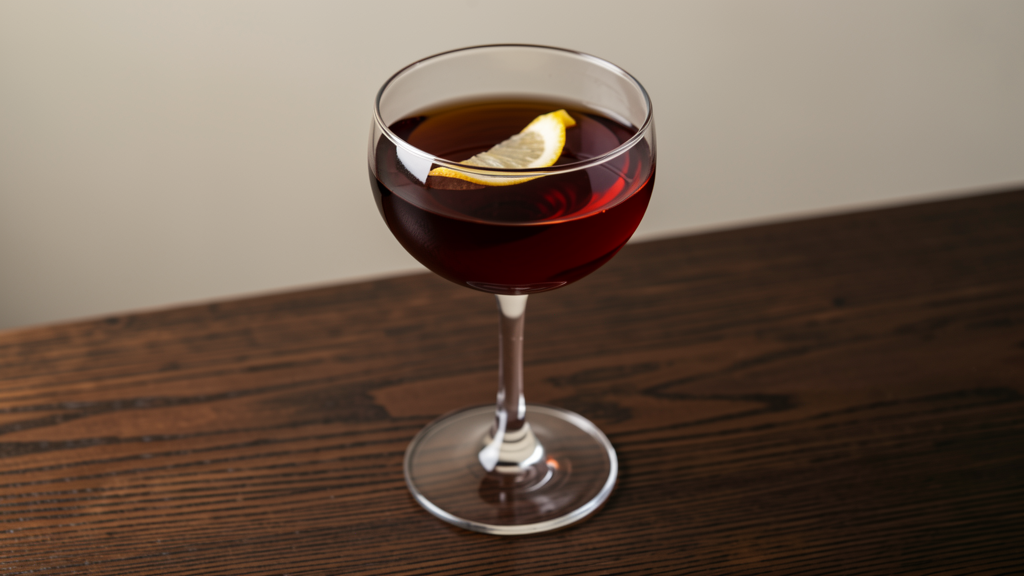
Freezer-Door Batch
Pre-batch this in a 1L swing-top bottle. The flavors marry beautifully over 24-48 hours. Serve cold, straight up or on the rocks.
Notes on Batching
This cocktail batches beautifully. The flavors integrate more each day. Day 1 tastes bright and alive; day 2-3 tastes rounder and more harmonious. Some prefer day 1 (sharper edge), others prefer day 2 (more integrated). Find your preference and rebatch accordingly.
The batch lasts about 2 weeks refrigerated. As it ages past day 3, the Campari's brightness will fade slightly—this is normal. If you notice off flavors or oxidation, move on to a fresh batch.
Single Serve
Mix to order for maximum brightness and control. This version is less diluted than the batched version, so the spirit intensity is higher.
Notes on Single Serve
The ratio is slightly more spirit-forward than a classic Manhattan because Campari (at 48 proof) brings less dilution than sweet vermouth alone would. This makes the drink drier and more herbal—exactly the point.
If you find this too intense, you can reduce the rye to 1.75 oz and increase the vermouth to 1.25 oz. This brings it closer to a traditional Manhattan while keeping Campari's character.
Why This Drink Exists
The Manhattan is one of the oldest cocktails in print (1880s, Manhattan Club, NYC). The classic formula is rye, sweet vermouth, and Angostura bitters—a near-perfect balance of spirit, sweetness, and spice.
This version, known as a Black Manhattan, swaps some (or all) of the sweet vermouth for Campari. This shift moves the drink from "dessert-like" to "aperitif-like"—suddenly, instead of a warm finish, you get bitterness and brightness.
The dry version (this one) leans further into that aperitif character, which is why we call it "The Aperitif." It's spirit-forward, herbal, and inviting—the kind of drink that opens your palate and makes you hungry.
Influenced by craft bartending traditions that respect classical formulas while exploring their boundaries.
The Flavor Arc
What Each Ingredient Brings (and Why)
Rittenhouse Rye
Rittenhouse (100 proof, 51% rye, 37% corn, 12% malted barley) brings warmth, spice, and structure. The high rye content means more spice (clove, pepper) than sweeter rye expressions. At 100 proof, it's bottled-in-bond strength—no watering down—which is crucial for a cocktail's backbone.
Why this one: Approachable, reliable, and traditional. A benchmark rye that lets other ingredients shine without fighting for dominance.
Campari
Campari is a red amaro made with 48 proof, secret formula. Its key characteristics: herbal bitterness (from gentian, rhubarb, and other roots), bright red color (from carmine), and a fruity-bitter profile that doesn't taste medicinal.
Why this one: Campari is the hero of this drink. It defines the drink's identity. Swap Campari for another amaro, and you've renamed the cocktail. This is where the bitterness + brightness live.
Antica Formula Vermouth
Antica Formula is an Italian sweet vermouth made by Carpano. It's herbal (wormwood, cinnamon, vanilla notes), slightly bitter on the finish, and more complex than lighter sweet vermouths. It's commonly used in Manhattans because its vanilla + herbal sweetness works with rye's spice.
Why this one: Its slight bitterness on the finish pairs beautifully with Campari. Together, they create a complex herbal backbone that prevents the drink from tasting one-dimensional.
Angostura Bitters
Angostura (44.7% ABV, made in Trinidad) adds spice (clove, cardamom, nutmeg, bitters plant roots). A dash or two reinforces complexity without dominating.
Why these instead of something else: Peychaud's bitters (which we use in Sazerac) are more anise-forward; Angostura is clove-forward. For a rye Manhattan with Campari, Angostura's spice profile works better. Peychaud's would feel out of place.
Variations to Explore
The Boulevardier
Swap rye for Cognac: 1 oz Cognac + 0.5 oz Campari + 0.5 oz Antica
The result: rounder, less spice, more fruit. Cognac brings vanilla + stone fruit, which softens Campari's edge. A great winter variation.
More Campari
Increase Campari to 1.25 oz (single serve): 2 oz Rye + 1.25 oz Campari + 0.75 oz Antica
More herbal bitterness, less sweetness. Leans even more aperitif. Good if you want maximum brightness.
Different Rye
Try Sazerac Rye or Wild Turkey 101 instead of Rittenhouse. Each brings slightly different spice profiles.
Sazerac (95 proof) is slightly higher in rye %, so more peppery. Wild Turkey 101 is lower rye %, so slightly sweeter. Taste the difference.
This is an exploration. Taste the batched version on day 1, day 2, and day 3. Notice how it changes. Try the single-serve version too. Notice which one you prefer, and why. That curiosity—about why things taste the way they do—is where the real pleasure lives.