Rosé Paloma Punch
Tequila, rosé, grapefruit soda, lime. Equal-opportunity aperitif for a group.
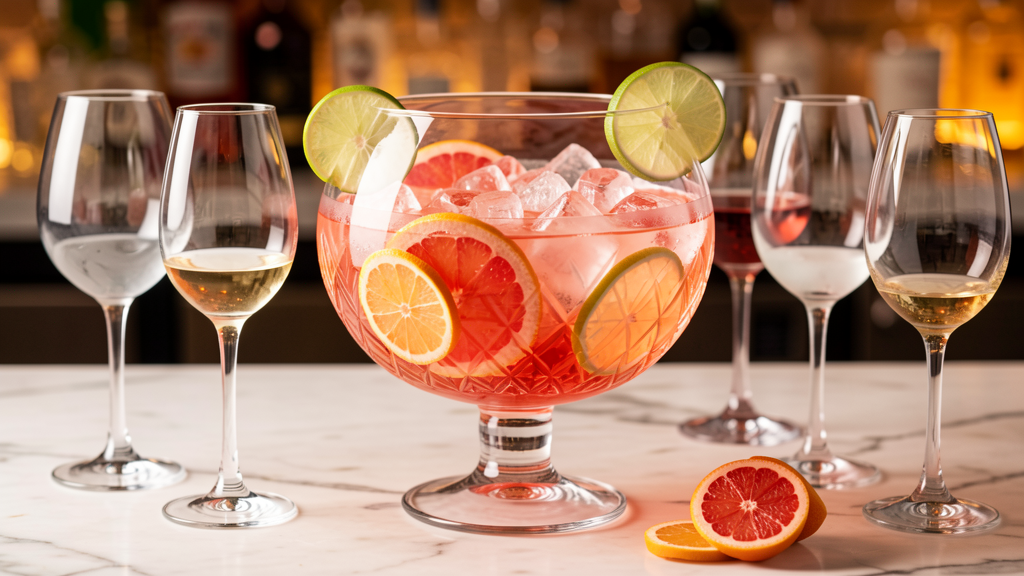
The Rosé Paloma Punch is tequila-forward despite reading like a wine drink -- the rosé adds body and subtle fruit, but blanco tequila is the spirit driving the build. The Paloma template (tequila, grapefruit, lime) is one of Mexico's most popular cocktail frameworks, and this version opens it up for a group by using rosé as the sweetening and body agent instead of simple syrup. The grapefruit soda delivers both the acid and the effervescence. It is a natural warm-weather crowd pour.
The Paloma is Mexico's most popular cocktail -- more popular than the Margarita by consumption. Its exact origin is disputed, but it is closely associated with Don Javier Delgado Corona of La Capilla bar in Tequila, Jalisco, who mixed tequila and grapefruit soda for decades. This batch version adapts the template for larger format serving.
Batch (Serves 8-10)
Pre-batch the rosé and tequila. Add grapefruit soda and fresh lime at serve to preserve carbonation and brightness.
Notes on the Batch
Grapefruit soda and lime stay out of the pre-batch -- both for carbonation preservation and flavor freshness. The rosé-tequila base holds fine overnight in the refrigerator. A dry Provencal rosé is preferable to anything sweet or off-dry, which would push the punch too far toward dessert territory.
Single Serve
Build over ice in the glass.
What Each Ingredient Brings
The spirit driving the build. Blanco tequila is unaged, so it comes through clean and agave-forward -- you taste it clearly. Against the rosé's body and grapefruit's acid, it provides the structural backbone that keeps this from reading as a wine spritz with an afterthought of liquor.
Use something clean rather than characterful -- Espolon and Olmeca Altos work well. Mezcal would shift the flavor profile significantly toward smoke, which competes with the grapefruit.
The sweetening and body agent. A dry Provencal rosé brings mild red fruit, some mineral dryness, and enough body to give the drink texture that grapefruit soda alone cannot provide. It is not doing the work of vermouth, but it is doing something similar -- adding complexity without dominating.
Sweet rosé will tip the drink too far toward dessert. Dry is correct here.
Both the acid and the effervescence. Jarritos Grapefruit is sweeter and more candy-like; Fever-Tree Pink Grapefruit is sharper and more bitter-edged. Both work. The fizz is structural here -- a still grapefruit juice version would be heavier and less refreshing.
Added at serve to preserve carbonation. Pre-batched grapefruit soda becomes flat in under an hour.
The brightening agent. Grapefruit soda provides acid, but it is rounded acid -- softer citrus character. Fresh lime brings a sharper citrus edge that lifts the drink and keeps it feeling lively. Half an ounce per serving is right; the soda is doing most of the acid work already.
Flavor Arc
An adaptation of the Paloma template for large-format serving. The Paloma is Mexico's most consumed cocktail and one of the most underrated frameworks in bartending. This batch version makes it accessible for a group.