The Old Cuban
A mojito that grew up
Audrey Saunders created the Old Cuban in 2001 at Bemelmans Bar in New York, four years before she opened Pegu Club. The drink takes the mojito's architecture and rebuilds it with better materials: aged rum instead of white, Champagne instead of soda water, and Angostura bitters to push it into cocktail territory. It was one of the first modern cocktails to treat Champagne as a building ingredient rather than a standalone drink, using its dry effervescence as a structural element rather than a flourish.
Pegu Club opened in 2005 and became the most influential bartender training ground of the craft cocktail era. The bartenders who passed through it went on to open defining bars across the country. The Old Cuban traveled with them. It is Saunders's signature drink and one of the few cocktails from that period that looks as good now as it did then: elegantly built, historically grounded, and genuinely hard to improve on.
Batch Spirits
Batch the rum, bitters, and simple syrup. Fresh mint, lemon, and sparkling wine must be added per drink at service.
Notes on Service
The sparkling wine must be added fresh per drink — it cannot be pre-batched. Use a dry cava or prosecco. Champagne works for a special occasion version.
Single Serve
The mint should be lightly shaken, not muddled — you want aroma, not bitter chlorophyll.
Why This Drink Exists
Audrey Saunders built the Old Cuban on a simple observation: the mojito's ingredients are excellent but the format is casual. Aged rum adds complexity that white rum lacks. Champagne adds elegance and structure that soda cannot. Angostura bitters make it a cocktail — the ingredient that separates a drink from a recipe.
The Pegu Club (2005–2020) was one of the most influential bars in modern American cocktail history. Saunders mentored bartenders who went on to open landmark bars across the country. The Old Cuban was her signature drink.
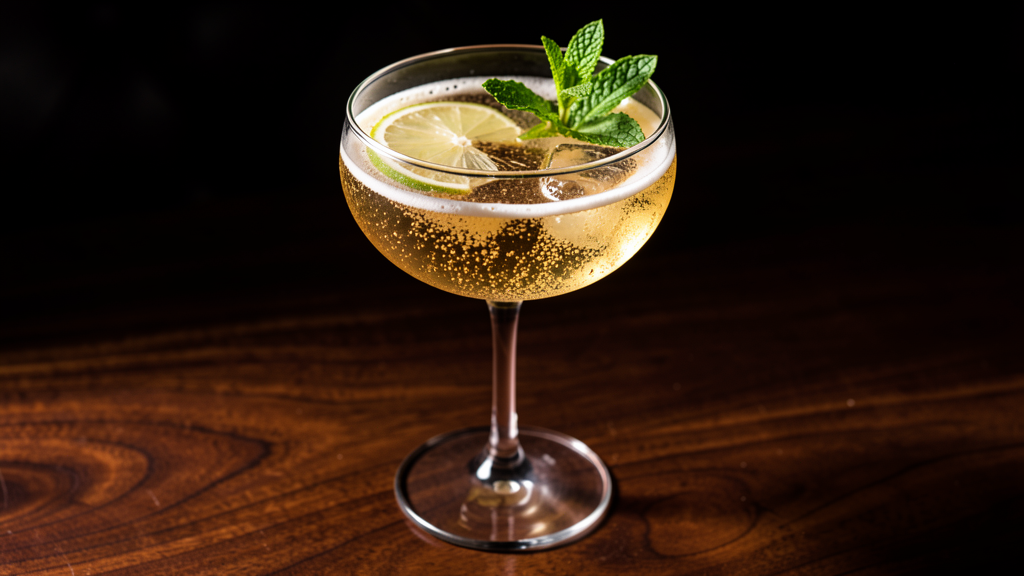
The double strain is important: you want the mint flavor and aroma but not the leaf matter in a coupe. The result is a clear, pale-gold drink that smells like the best mojito you've ever had but drinks with the composure of a French 75.
The Flavor Arc
What Each Ingredient Brings
Aged Rum
The step-up from white rum that makes this drink work. Aged rum has caramel, vanilla, and tropical fruit from oak contact.
Why aged: white rum would make this a standard daiquiri with mint and bubbles. Aged rum adds the depth the drink needs.
Fresh Lime Juice
The acid backbone. Essential fresh — the oxidation in bottled lime juice would undermine the drink's brightness.
Squeeze to order. If making many drinks, squeeze lime within 2–4 hours of service.
Angostura Bitters
Two to four dashes elevate this from mixed drink to cocktail. Angostura's spice (clove, cardamom) pairs with both rum and sparkling wine.
The ingredient that separates the Old Cuban from a dressed-up mojito.
Dry Sparkling Wine
Cava from Spain is the practical choice — bone dry, affordable, elegant bubbles. Champagne for special occasions.
The bubbles add texture and lift. The dryness keeps the drink from tipping sweet.
Variations to Explore
Champagne Version
Use actual Champagne instead of cava or prosecco. The autolytic complexity of aged Champagne adds a breadth-and-yeast note that elevates the drink further. Special occasion only.
Rhum Agricole
Sub Haitian or Martiniquan rhum agricole for the aged rum. More grassy and raw sugarcane character — the mint reads differently against it.
Demerara Syrup
Sub demerara syrup for simple syrup. Richer, molasses-adjacent sweetness that deepens the rum character.
Recipe by Audrey Saunders, Pegu Club NYC (circa 2005). A modern classic.