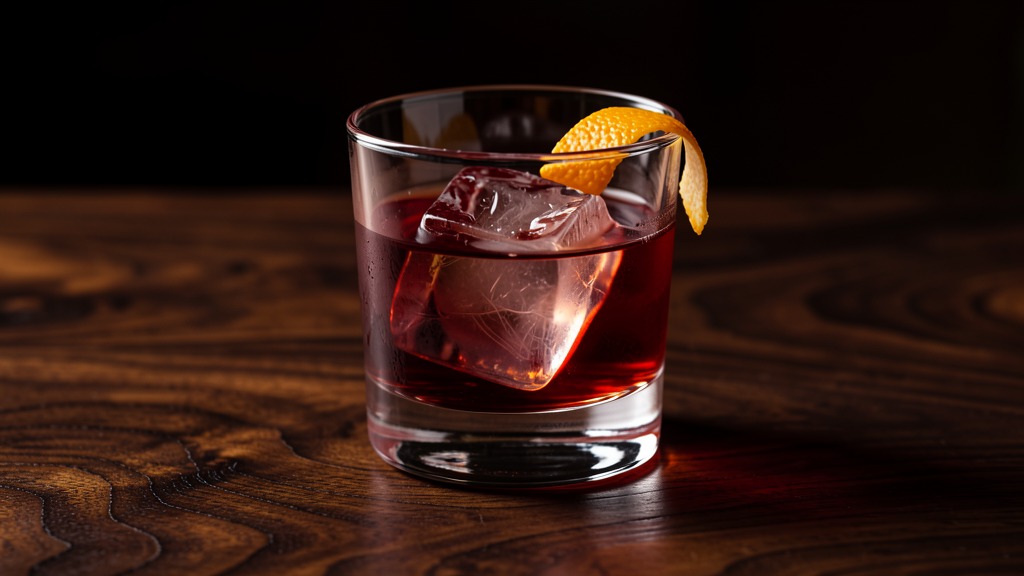
Equal parts gin, Campari, and sweet vermouth. Bitter-sweet, spirit-forward, and perfectly balanced.
The Negroni is an Italian aperitif of radical simplicity. Three ingredients. No bitters. No modifiers. No hiding. In 1919, Count Camillo Negroni walked into Caffè Casoni in Florence and asked bartender Fosco Scarselli to strengthen his Americano by swapping the soda water for gin. The drink took his name. It has never needed anything else.
The genius of the Negroni is that nothing dominates. Gin's botanical structure doesn't overshadow Campari's bitterness. Campari doesn't hide the vermouth. Vermouth doesn't sweeten it into submission. Taste one made well, and you understand what balance means.
Freezer-Door Batch (1L)
Equal parts all three ingredients. Batch overnight in the freezer, serve over ice with a stir.
12 oz
Gin (London Dry)
Botanical structure and juniper
12 oz
Campari
Intensely bitter-sweet Italian spirit
12 oz
Sweet Vermouth (Antica Formula)
Rich, oxidized, herbal
Yield: ~10 drinks (3oz each), served with ice
Steps
Measure 12 oz gin into a 1L bottle.
Add 12 oz Campari.
Add 12 oz Antica Formula sweet vermouth.
Cap and stir or shake gently to combine.
Freeze overnight (12+ hours).
At serve time: pour 3 oz batch into rocks glass over fresh ice.
Garnish with orange twist (express oils over drink).
Single Serve (3oz)
Build equal parts in a mixing glass. Stir with ice, strain into rocks glass.
1 oz
Gin (London Dry)
Botanical structure and juniper
1 oz
Campari
Intensely bitter-sweet Italian spirit
1 oz
Sweet Vermouth (Antica Formula)
Rich, oxidized, herbal
Steps
Pour gin, Campari, and vermouth into mixing glass.
Fill with ice and stir for 30 seconds.
Strain into rocks glass over fresh ice.
Garnish with orange twist.
Why Each Ingredient Matters
Gin (London Dry)
Structure and balance. The botanicals (juniper, coriander, citrus peel) provide a bridge between Campari's aggressive bitterness and vermouth's sweetness. A quality London Dry gin is essential. Cheap gin becomes invisible.
Campari
Identity. 11+ secret botanicals create intense bitter-sweet character. This bitterness is not a flaw to hide. It's the point. If you don't like Campari's edge, the Negroni isn't for you.
Sweet Vermouth (Antica Formula)
Balance and depth. Antica Formula is richer and more complex than basic sweet vermouth. Its oxidized notes complement Campari's botanicals. It rounds without sweetening too much.
Flavor Arc
First Sip
Immediate bitterness from Campari. Gin's botanical structure. Vermouth's sweetness underneath, not dominant, but present.
Mid-Palate
The bitterness integrates. You taste how each component plays off the others. Not a fight, a conversation. Balanced, sophisticated, open-ended.
Finish
Lingering bitterness and herbal notes. Warm, slightly spicy from gin botanicals. The drink stays with you, intentionally.
Variations
Negroni Sbagliato (Sparkling)
Replace gin with Prosecco or sparkling wine. Lighter, brighter, less spirit-forward. Still balanced, but more aperitif-like than digestif.
Boulevardier
Replace gin with bourbon, not rye, and adjust to 1.5 oz whiskey against 0.75 oz each Campari and vermouth. The whiskey takes more real estate than gin does here, and needs it. Darker, warmer, and the sweetness tips toward the spirit rather than holding the center.
Extra Campari (More Bitter)
Use 14 oz Campari and 10 oz vermouth (in batch). More aggressive, less sweet. For bold palates.
The Negroni teaches balance. Three equal voices. No hierarchy. This is cocktail democracy.
 James Davis