 James Davis
Martini de Jerez
A scholarly Dirty Martini: sherry barrel gin, Empirical Olive, fino en rama, and dill extraction.
Recipe by Miles Macquarrie, Kimball House, Decatur, Georgia.
The Dirty Martini is one of the most polarizing drinks in the American canon. For its detractors, it's a corruption, with brine drowning gin and olive juice clouding something that should be crystal-clear and clean. For its champions, it's the only Martini with real savory depth.
The origin story traces to the early 1900s, with some attributing the first dirty version to a bartender named John O'Connor at the Waldorf Astoria around 1901, who muddled olives directly in the glass. The modern form, a splash of olive brine shaken into the mix, became popular mid-century, particularly in American hotel bars where it provided a food-forward alternative to the pure spirit version.
Miles Macquarrie's Martini de Jerez at Kimball House is a scholarly reimagining. Instead of briny olive brine, he uses Empirical Olive, a distilled olive spirit that brings the essence of olive without the cloudiness. The fino en rama sherry (unfiltered, direct from the cask) provides salinity and oxidative complexity that traditional dry vermouth can't match. The dill extraction, made via rotary evaporator at the bar, introduces herbaceous, almost grassy notes that bridge the gin and sherry. The result is a Dirty Martini that is simultaneously more refined and more intensely flavored than the original it references.
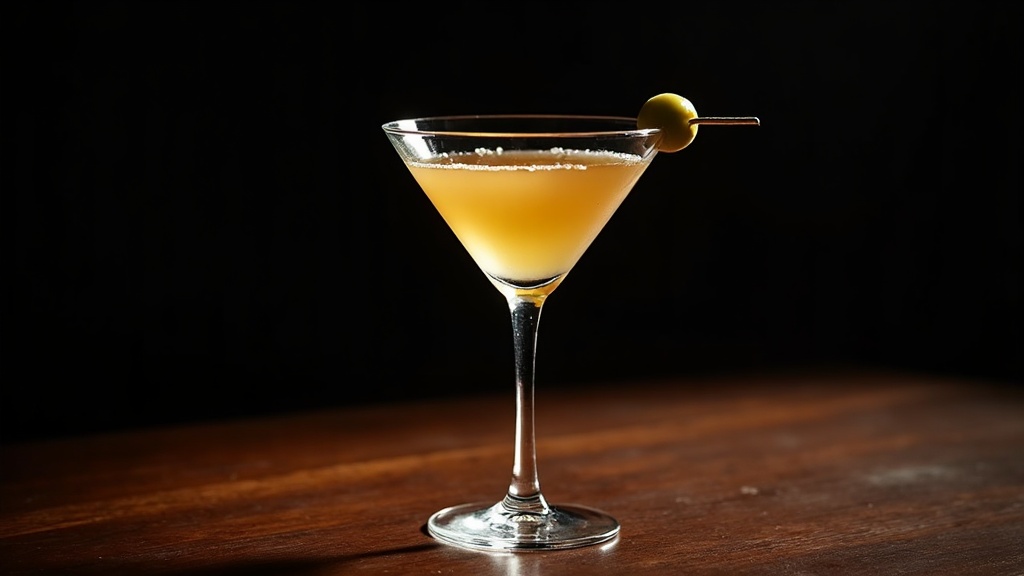
Single Serve
Steps
The Dill Extraction
The original Kimball House recipe uses a Büchi R300 rotary evaporator to make this extraction, professional laboratory equipment that extracts volatile aromatic compounds under low pressure and controlled heat. It captures the fresh, green, herbal quality of dill without any of the cooked or bitter notes you'd get from heat infusion.
For home use, the closest approach is a cold vacuum infusion. If you have a vacuum sealer, this works well. Without one, a cold infusion in high-proof vodka for 24-48 hours gets you most of the way there.
Vacuum method: Combine dill and cold vodka in a vacuum bag. Seal on maximum compression. Infuse in the refrigerator for 24 hours. Strain through fine-mesh cheesecloth, pressing firmly. Bottle and refrigerate. Use within 2 weeks.
Standard infusion: Combine dill and vodka in a sealed jar. Refrigerate for 48 hours, shaking twice daily. Strain through fine-mesh, then again through coffee filter for clarity.
Note: The rotary evaporator version achieves a purer, more volatile-compound-forward extraction. The home version is earthier and slightly more bitter. Still excellent.