Mai Tai (Batched)
Classic Tiki Cocktail
Victor Bergeron, known as Trader Vic, created the Mai Tai in 1944 at his restaurant in Oakland. The founding legend holds that he made it for two Tahitian friends visiting from Tahiti, one of whom tasted it and said "Mai Tai, Roa Ae" -- meaning, roughly, out of this world. Bergeron's original recipe was precise: aged Jamaican rum, French orgeat, orange curaçao, and fresh lime. No pineapple juice. No fruit garnish beyond a spent lime shell. No grenadine. Nothing frozen.
The original uses rhum agricole (French style, grassy) and white rum together, creating depth. For freezer-door batching, white rum alone works beautifully. Orange curaçao brings warm citrus without acidity. Orgeat (almond syrup) brings sweetness and nutty character that rounds everything.
Freezer-Door Batch (1L)
Pre-batch rum, orange curaçao, and orgeat. Fresh lime juice must be added at service to prevent oxidation.
Single Serve
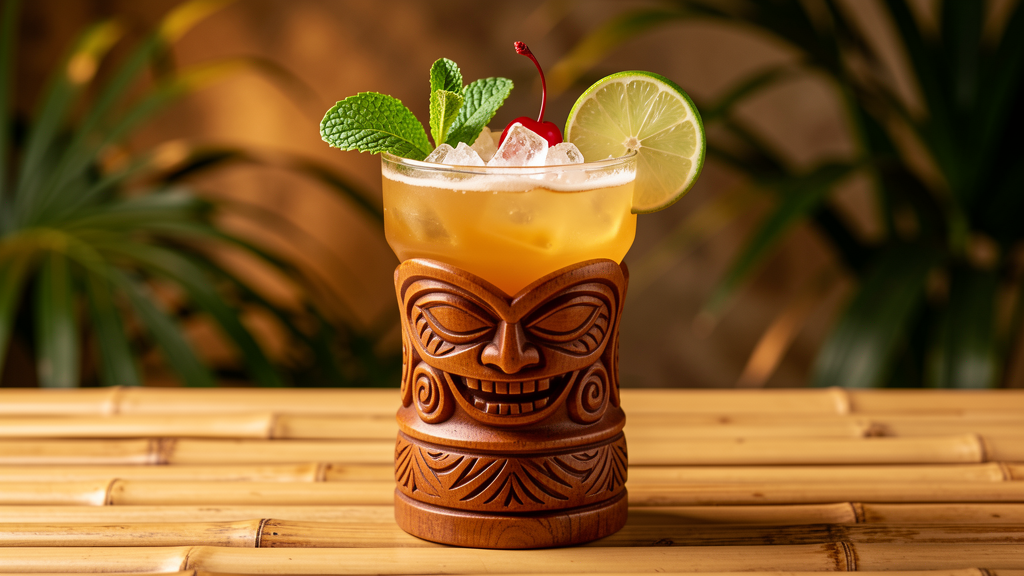
Fresh lime juice added at service. Serve over crushed ice with a mint sprig.
Why This Drink Exists
The Mai Tai was created in 1944 by Trader Vic (Victor Bergeron) in his Oakland, California tiki bar. It's one of the most balanced tropical cocktails ever invented—a masterclass in flavor architecture.
The original uses rhum agricole (French style, grassy) and white rum together, creating depth. For freezer-door batching, white rum alone works beautifully. Orange curaçao brings warm citrus without acidity. Orgeat (almond syrup) brings sweetness and nutty character that rounds everything.
Fresh lime juice is the final piece—it brings tartness and brightness that can't be batched. The result: complex, tropical, balanced, and deeply drinkable. This is the drink that defined tiki cocktail culture.
Classic tiki cocktail tradition (1944, Trader Vic). Adapted for freezer-door service.
The Flavor Arc
What Each Ingredient Brings (and Why)
White Rum (Bacardi Superior or Appleton)
40% ABV, clear, light-bodied. Bacardi is Dominican (light, slightly sweet). Appleton is Jamaican (more estery and tropical). Both work; choice depends on preference.
Why this ingredient: White rum provides the tropical base. Clear color lets the orange curaçao and orgeat shine. You want tropical character, not depth—save depth for dark rum variations.
Orange Curaçao
40% ABV liqueur made from dried citrus peels. Dutch style, from Curaçao island. Brands: Bols, Cointreau (premium), or Marie Brizard (budget). Deep orange color, warm citrus aroma, not tart.
Why this ingredient: Orange curaçao brings warm citrus notes (not sharp acidity like fresh juice). This is crucial—fresh orange juice would oxidize in the batch. Curaçao is shelf-stable and brings sophistication.
Orgeat (Almond Syrup)
Made from almonds, sugar, rose water (sometimes orange water). Pale white/cream color, sweet, nutty. Brands: Monin, Torani, or homemade. NOT artificial almond flavoring—real almond.
Why this ingredient: Orgeat IS the soul of the Mai Tai. It brings sweetness and almond depth that makes the drink feel elegant. Without it, you have rum, citrus, and lime—which is fine, but not Mai Tai.
Filtered Water
Plain water, filtered or distilled. Provides dilution and prevents excessive freezing.
Why this ingredient: Proper dilution is crucial. Without water, spirits alone would freeze solid and be too boozy.
Variations to Explore
Dark Rum Addition
Add 2 oz dark rum (Myers's Dark or Gosling's) to the batch. Brings caramel depth.
More sophisticated, less tropical, more dessert-like.
Fresh Lime Concentrated
If using fresh lime juice in the batch (not at service), keep it strictly chilled and use within 24 hours.
More convenient for parties, less optimal flavor.
Falernum Addition
Add 1 oz Falernum (spiced creole syrup) to the batch. Brings spice and warmth.
More complex, spicy-sweet profile.
This is an exploration. Taste the batched version on day 1, day 2, and day 3. Notice how it changes. Try the single-serve version too. Notice which one you prefer, and why. That curiosity—about why things taste the way they do—is where the real pleasure lives.