Lychee Kiss Spritz
Gin, lychee, and raspberry -- built for a celebration
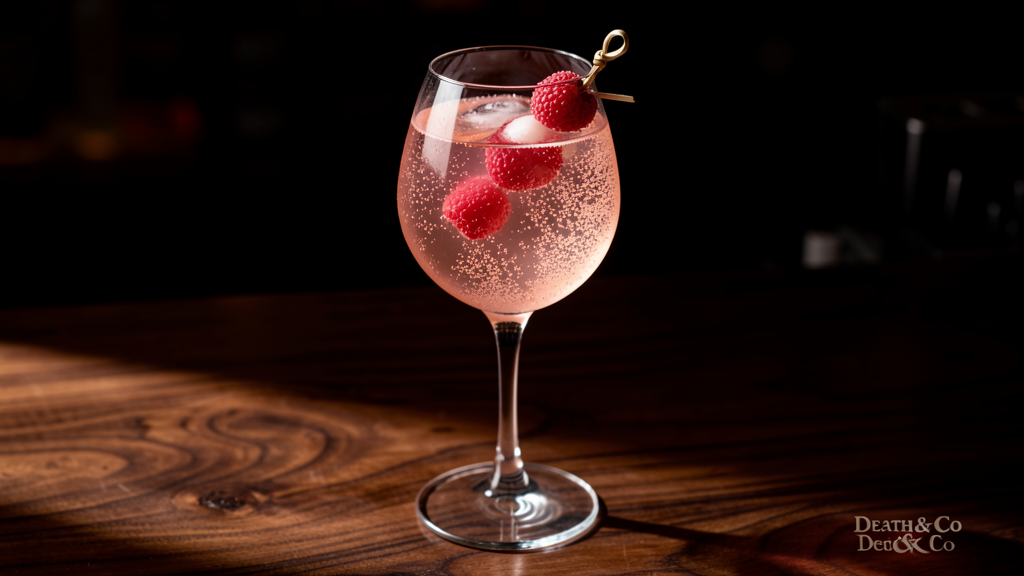
The canned lychee syrup is the secret. Most recipes treat it as a throwaway byproduct -- the lychee is used and the syrup is discarded. Here the syrup is the sweetener and the flavoring: concentrated lychee with a floral, tropical intensity that no fresh lychee can replicate. Raspberry provides acid and color; Prosecco adds effervescence and lightness. The gin anchors everything. The drink reads as celebratory because it is unapologetically aromatic -- lychee's floral register and raspberry's brightness create a spritz that is specific and considered, not generic.
Single Serve Only
Fresh raspberry, lychee muddling, and prosecco make this single-serve only. The muddled fruit and bubbles cannot be pre-batched without degrading.
Drink Notes
Muddle firmly enough to release juice but not so hard you get bitter pith. Strain through a fine mesh to remove seeds.
Why This Drink Exists
Canned lychees produce a syrup that is intensely floral and perfectly balanced — the lychee fruit has already macerated in simple syrup, creating a ready-made ingredient that would take hours to replicate from scratch. It is one of those pantry ingredients that performs better in a cocktail than as a fresh-squeezed equivalent.
The raspberries provide tartness and color. Lychee on its own can read as too sweet and perfumed — the raspberry acidity creates the tension that makes the drink refreshing rather than cloying.
Prosecco is the right choice here (not Champagne, not cava) because its slight sweetness complements the lychee without adding the toast and autolysis notes that would compete with the floral profile. Recipe by Bev via TikTok.
The Flavor Arc
What Each Ingredient Brings
Lychee Syrup (canned)
The syrup from a can of lychees — already sweetened and intensely flavored. Far more concentrated and balanced than anything you could make from scratch quickly.
Buy any brand of canned lychees, drain the syrup into a jar. Keep refrigerated for up to 2 weeks.
Fresh Raspberries
Muddled to release juice and color. The tartness of raspberry is the balance to lychee's sweetness.
Why fresh: frozen raspberries work in a pinch but release more water and lose the bright tartness. Fresh is noticeably better.
Gin
Botanical backbone. The Botanist (floral, complex) or Plymouth (soft, approachable) both work. Avoid heavily citrus-forward gins.
Why gin over vodka: the botanicals add complexity and make this feel like a cocktail. Vodka would let the lychee sweetness dominate.
Prosecco
Italian sparkling wine from the Veneto region. Slightly sweeter than Champagne or cava, with soft stone fruit and floral notes.
The sweetness and softness of prosecco complements the lychee. A bone-dry cava would work but creates more tension.
Variations to Explore
St-Germain Version
Sub St-Germain elderflower liqueur for the lychee syrup. Different floral profile — more herbaceous, less tropical. Still excellent.
Rose Water Addition
Add 1/4 tsp rose water to the shaker. More perfumed, Middle Eastern in character. For palates that love floral intensity.
Sparkling Sake
Sub Japanese sparkling sake for prosecco. Citrus and rice character against the lychee creates an interesting East-meets-East profile.
Recipe by Bev via TikTok (@myfriendscallmebev). Adapted for jamesdavis.net.