Jungle Bird (Clarified)
The classic tiki build, refined and clarified
The original Jungle Bird was created at the Kuala Lumpur Hilton in 1973 by bartender Jeffrey Ong. This clarified version uses milk washing -- a technique with roots in 18th-century English punch-making, where milk was added to a punch, curdled by the acid in the citrus, and then strained out, carrying tannins and harsh compounds with it. The result is a cocktail with the same flavor profile but crystal-clear appearance and a noticeably silkier texture. The milk wash removes the visual turbidity of pineapple and lime without removing flavor. It is a technique that makes a point: that tiki drinks can be elegant.
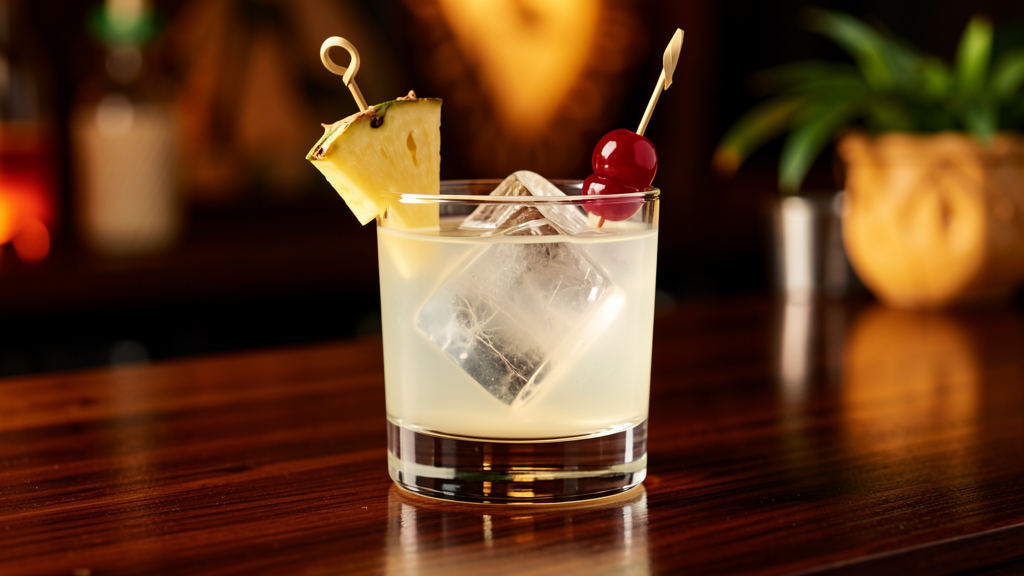
Clarified Batch (1L)
This is the clarified version — a milk wash technique produces a clear, silky drink. The standard Jungle Bird also lives on this site; this is the refined version.
On Clarification
Milk washing is a bartending technique used since the 18th century. The milk proteins (casein) bind with tannins and suspended solids, then sink to the bottom as the liquid is strained. What remains is crystal clear and noticeably silkier than the original. The dairy flavor does not carry through — only the clarity and texture.
Single Serve (Standard)
The standard single serve — no clarification required. Shake with crushed ice and dump.
Why This Drink Exists
Jeffrey Ong created the Jungle Bird at the Aviary Bar in the Kuala Lumpur Hilton in 1973, as a welcome drink for arriving guests. It sat relatively unknown until Jeff Berry featured it in his 2002 book Intoxica! — at which point it became a staple of the tiki revival.
What makes the Jungle Bird unusual among tiki drinks is Campari. Almost every other tiki drink uses sweet, fruity, or spiced modifiers. Campari is bitter, herbal, and orange-forward — it creates tension against the pineapple and rum that most tiki drinks never attempt.
The clarified version applies milk washing — an 18th-century English technique — to a 1970s Malaysian creation. The result is a clear, silky drink that looks like iced tea and tastes like a perfectly balanced Jungle Bird. The technique strips turbidity without stripping flavor.
The Flavor Arc
What Each Ingredient Brings
Planteray O.F.T.D.
Of The Dark — a blend of Barbadian, Guyanese, and Jamaican rums at 138 proof. The blend provides tropical complexity; the overproof level means flavor holds up against pineapple juice.
Why overproof: standard proof rum gets dominated by pineapple. OFTD has the presence to stay in the conversation.
Campari
The unusual choice — a bitter Italian aperitivo in a tiki drink. Its orange-bitter character creates a flavor tension that makes the Jungle Bird memorable.
The reason this drink stands out in the tiki canon. Without Campari it would be a rum-pineapple punch. With it, it's a cocktail.
Fresh Pineapple Juice
The tropical backbone. Fresh-squeezed is noticeably better than canned — sweeter, more aromatic, less metallic.
Cannot be pre-squeezed more than 4 hours ahead. Oxidizes quickly.
Milk (for clarification)
Whole milk provides casein proteins that bind with suspended solids, tannins, and pulp. The curds are strained away; the liquid that remains is clear and silkier.
The technique does not add dairy flavor — only clarity and texture. It has been used in cocktail production since the 1700s.
Variations to Explore
Standard Jungle Bird
The original — no clarification. Shake with crushed ice and dump. More texture, less elegance, equally delicious. See the standard Jungle Bird page.
Mezcal Jungle Bird
Sub 1 oz mezcal for 1 oz of the rum. Smoke against pineapple-Campari is an excellent combination.
Aperol Instead of Campari
Aperol is less bitter and more orange-sweet than Campari. The drink becomes softer and more approachable — loses some of the tension that makes the original special.
Original recipe by Jeffrey Ong, Aviary Bar, Kuala Lumpur Hilton (1973). Clarified version adapted for jamesdavis.net.