Espresso Martini (Batched)
Coffee Cocktail
Dick Bradsell created the Espresso Martini in 1983 at the Soho Brasserie in London. The story is that a young model asked him for a drink that would wake her up and then finish the job. He combined vodka, coffee liqueur, and a shot of espresso from the bar's machine. The drink became a staple of the 1980s and 1990s, then fell out of fashion when the craft cocktail movement dismissed it as too sweet and too trendy. Then, in the early 2020s, it came back hard, driven by social media and home bartending, and now it's everywhere again.
The batched version solves a real technical problem. Fresh espresso is unstable: the oils oxidize, the crema breaks down, and within hours the flavor turns flat and bitter in the wrong direction. It also doesn't freeze cleanly. This recipe dissolves instant espresso powder directly into warm vodka, which reconstitutes without the instability. The result holds its coffee character for days in the freezer, without the separation or freezing issues that kill fresh-espresso batches.
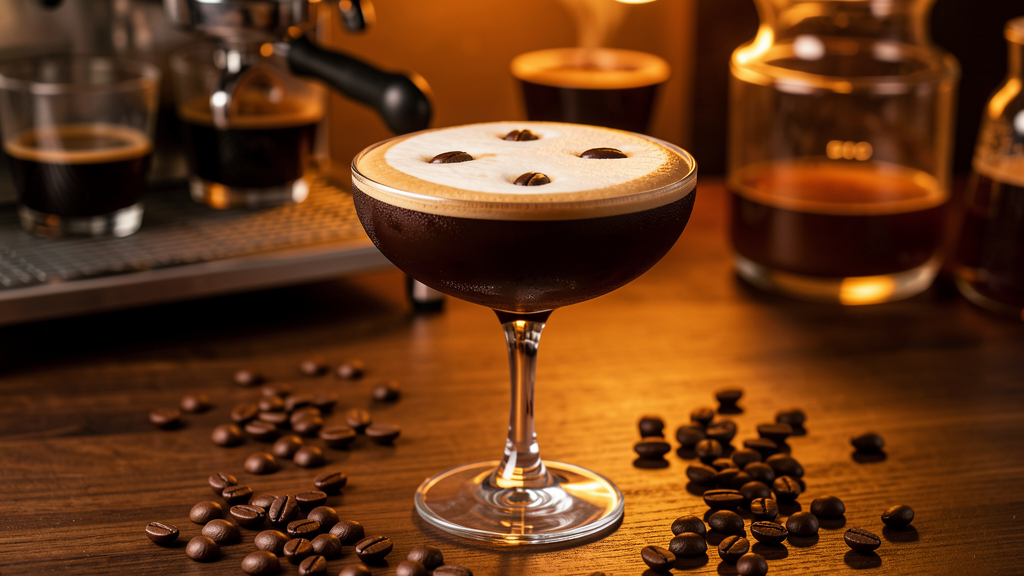
Freezer-Door Batch (1L)
Pre-batch this in a 1L swing-top bottle. The flavors marry beautifully over 24-48 hours. Serve cold, straight up.
Single Serve
Mix to order for maximum coffee aroma. This version uses chilled batched mixture.
Why This Drink Exists
The Espresso Martini is a modern classic born in 1980s London, created at the Soho Brasserie. It caught fire in cocktail culture because it solves a fundamental problem: how do you make a coffee cocktail that tastes like coffee, not cough syrup?
Fresh espresso oxidizes within hours—the oils turn bitter, the aroma fades. For batch service, fresh espresso is a liability. This recipe swaps fresh shots for instant espresso powder, which is shelf-stable and brews cleanly into vodka when gently heated. Kahlúa brings the coffee depth and vanilla sweetness that prevents the drink from tasting harsh.
The sea salt is the secret weapon. It amplifies the coffee flavor and adds subtle umami that makes the drink taste less like a dessert and more like a proper cocktail. This version works beautifully frozen because the cold cuts the sweetness and lets the espresso's bitterness shine.
Shelley Fang, Big Batch Espresso Martinis (AllRecipes, 2024)
The Flavor Arc
What Each Ingredient Brings (and Why)
Vodka (Tito's or Ketel One)
Neutral grain spirit, 40% ABV. Both brands are excellent because they disappear into the coffee—no competing flavors. Tito's is American; Ketel One is Dutch. Both are widely available and reliable.
Why this ingredient: In an Espresso Martini, vodka is the invisible carrier. You want the coffee to sing, not the spirit. A flavored vodka (vanilla, citrus) would fight with the espresso.
Kahlúa
Mexican coffee liqueur, 20% ABV. Made from Arabica coffee, vanilla, sugar, and secret botanicals. It's rich, sweet, and creamy—not bitter like black coffee.
Why this ingredient: This is where the drink's sweetness lives. Without Kahlúa, you'd have a bitter, sharp drink. With it, you have a dessert-cocktail that still tastes like coffee. It's the balance.
Instant Espresso Powder
Finely ground espresso beans, freeze-dried. Quality brands: Medaglia d'Oro, Illy. When dissolved in warm vodka, it reconstitutes cleanly—no sediment, no bitterness spikes.
Why this ingredient: Batching innovation. Fresh espresso oxidizes in hours; powder lasts weeks. When heated gently in vodka, it brews cleanly. This lets you batch without quality loss.
Simple Syrup (1:1)
Equal parts sugar and water, boiled and cooled. It's thinner and cleaner than bar syrup, dissolves instantly in alcohol.
Why this ingredient: Adds smoothness and balances espresso's bitterness. The pinch of sea salt (which you add separately) prevents this from being cloying.
Sea Salt
A pinch (less than 1/8 tsp per batch). Real sea salt, not table salt. Changes the flavor profile entirely.
Why this ingredient: Salt amplifies flavors. In an Espresso Martini, it brings out the coffee's depth and adds subtle umami that makes the drink taste sophisticated, not sugary.
Variations to Explore
Cold Brew Substitute
Instead of instant espresso powder, use 8 oz cold brew coffee concentrate. More rounded flavor, less bitter edge.
Cold brew brings mellowness. Some prefer it; others find it less 'punchy' than instant espresso.
Chocolate Addition
Add 0.5 oz Godiva chocolate liqueur to the batch. More dessert-like, richer mouthfeel.
Makes the drink heavier. Great for winter, less ideal for warm-weather service.
Irish Coffee Spin
Top each single serve with lightly whipped cream and a sprinkle of cocoa powder.
Transforms it into a dessert drink. Works for after-dinner service.
This is an exploration. Taste the batched version on day 1, day 2, and day 3. Notice how it changes. Try the single-serve version too. Notice which one you prefer, and why. That curiosity—about why things taste the way they do—is where the real pleasure lives.