 James Davis
Eleanor Roosevelt
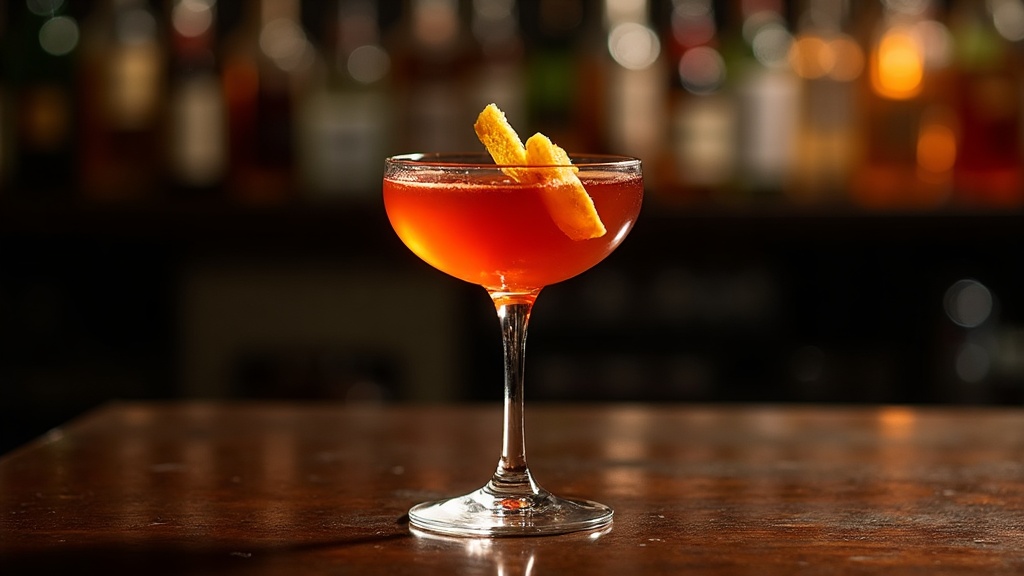
MOF Yellow Chartreuse, Grande Champagne Cognac, and lemon, a golden cocktail of quiet sophistication.
Recipe by Miles Macquarrie, Kimball House, Decatur, Georgia. Spec reconstructed from photographic evidence.
Eleanor Roosevelt (1884-1962) was not known as a serious drinker, she came from a temperance tradition and reportedly preferred weak cocktails. But she was known for entertaining with sophistication and for her appreciation of fine things presented simply. The name invokes an era of American elegance when cocktails were still understood as expressions of craft and occasion.
This drink by Miles Macquarrie at Kimball House is reconstructed from photographic evidence: the glass (a tulip or white wine glass, no ice, served up), the color (golden-amber, slightly translucent), a confident lemon twist over the rim, and most significantly, two specific bottles visible in the post: MOF Yellow Chartreuse (the Cuvee des Meilleurs Ouvriers de France Sommeliers edition, produced only for the biennial MOF competition) and Dudognon Grande Champagne Vieille Reserve Cognac (Premier Cru de Cognac, aged and complex).
Note on reconstruction: The recipe spec slide was not available. What follows is a best-estimate reconstruction based on the visible ingredients, glass style, color profile, and Miles's known approach. The spirit-to-modifier ratio follows Kimball House's typical build, and the proportions are calibrated to the color visible in the photograph. If you're after the exact original, seek it at the bar.
Single Serve
Steps
On the MOF Chartreuse
The Cuvee des Meilleurs Ouvriers de France Sommeliers is a limited-production Yellow Chartreuse released exclusively for the biennial MOF competition, France's top vocational excellence award, given to master craftspeople in their field. The MOF Sommeliers edition is aged longer and with greater botanical complexity than standard Yellow Chartreuse.
Standard Yellow Chartreuse (43% ABV) is the completely viable and widely available substitute. It has the same herbal DNA, 130 plants, honey, saffron, at a slightly lower complexity ceiling. For 99% of cocktails, the difference is academic.