Dirty Gin Martini (1.75L)
Batched for Entertaining
The dirty martini's origin is disputed, but olive brine appears in martini variations as early as the 1900s. The drink gained its current form mid-20th century, when savoury flavors became fashionable in American cocktail culture. The 'dirty' designation refers to the cloudiness from olive brine. It sits in an interesting position: technically a Martini variation, but the olive brine changes the drink's character completely -- from botanical and dry to savoury and briny. The 1.75L format here is specifically engineered for entertaining, where making individual Martinis slows the party.
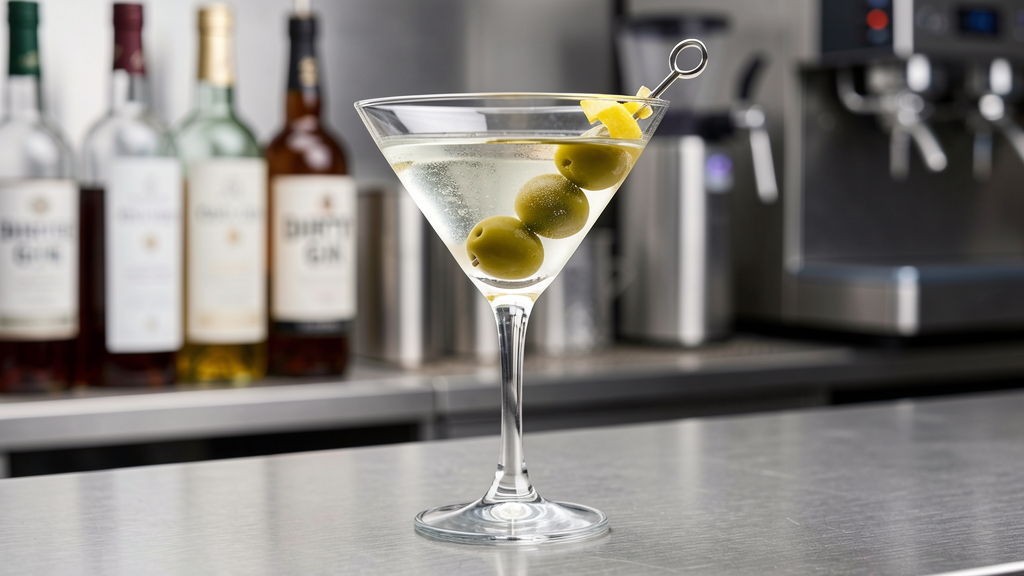
Freezer-Door Batch (1.75L)
Pre-batch this in a 1.75L swing-top bottle or two 750ml bottles. Serves approximately 15-16 cocktails.
Single Serve
Serve cold, straight up in a coupe or martini glass. Garnish with 1-2 quality olives.
Why This Drink Exists
The Martini is the essential stirred cocktail, possibly the most debated drink in cocktail culture. There is no 'perfect' martini—only your martini. But the Dirty Martini (martini + olive brine) is a legitimate and delicious variation.
The classic Martini is gin, dry vermouth, and ice—stirred and strained. The Dirty Martini adds olive brine, bringing savory, salty, umami character. Traditionally viewed as less elegant, but when done well with quality ingredients, it's deeply satisfying.
For freezer-door service at a dinner party, batching a Dirty Martini makes sense. You can serve 15+ drinks from a single bottle, each one consistent and cold. The brine adds texture and savory depth that makes the batch feel professional, not lazy.
Professional martini tradition. Olive brine technique from craft bartending.
The Flavor Arc
What Each Ingredient Brings (and Why)
Gin (Beefeater)
45% ABV London Dry gin made with 9 botanicals including juniper, coriander, angelica. Strong juniper profile, 65 years old tradition (since 1863). Reliable, consistent, excellent value.
Why this ingredient: Beefeater is the right choice for a large batch. Its juniper strength carries well in a batched drink. Premium gins might get lost in a 1.75L batch.
Dry Vermouth (Dolin)
18% ABV, from Chambéry region of France. Light, herbal, delicate. Not the heavy Italian dry vermouths like Noilly Prat—Dolin is lighter and more subtle.
Why this ingredient: Dolin brings subtle sweetness and herbalism without dominating. It lets the gin and olive brine carry the drink.
Olive Brine
From a jar of quality olives. Castelvetrano (Sicilian, buttery, mild), Brine-cured Spanish, or quality bar olives. The brine should be clean and salty, not musty.
Why this ingredient: Olive brine adds savory umami that makes the drink feel substantial. Professional bartenders use this technique. It adds texture and satisfaction.
Filtered Water
Plain water, filtered or distilled. Provides proper dilution without freezing issues.
Why this ingredient: Dilution is crucial for Martinis. A batch with only spirits would freeze solid. Water lets you serve at perfect temperature and strength.
Variations to Explore
Different Gin Choice
Use Tanqueray (more citrus) for a brighter martini, or a premium gin like Hendrick's for more complexity.
Different gins create different balance points.
Sherry Addition
Add 1-2 oz dry sherry (Fino or Manzanilla) to the batch. Brings roundness and subtle sweetness.
More sophisticated, less dry.
Different Vermouth
Try Noilly Prat (heavier, more herbal) for a more complex martini.
More complex, heavier, less delicate.
This is an exploration. Taste the batched version on day 1, day 2, and day 3. Notice how it changes. Try the single-serve version too. Notice which one you prefer, and why. That curiosity—about why things taste the way they do—is where the real pleasure lives.