Daiquiri
The Cuban Original
The Daiquiri was not invented in a bar. In 1898, American mining engineer Jennings Stockton Cox was working the iron-ore mines near Santiago de Cuba, in a region called Daiquirí, when a group of engineers visited and the gin ran out. Cox mixed what was available: Bacardi Carta Blanca rum, fresh limes from the yard, sugar, and ice. His colleague Francesco Pagliuchi tasted it and suggested calling it after the place they were. Cox wrote the formula in his journal and the drink survived.
Admiral Lucius Johnson visited Cox at the mines in 1909 and liked the drink enough to introduce it at the Army and Navy Club in Washington D.C., where a plaque in the Daiquiri Lounge still commemorates it. From there it spread through the craft bar culture of the early 20th century. David Embury codified its ratios in The Fine Art of Mixing Drinks (1948), arguing that most bartenders used "improper proportions" and that the rum should dominate. He was right.
Three ingredients. The rum is the drink. Everything else is architecture.
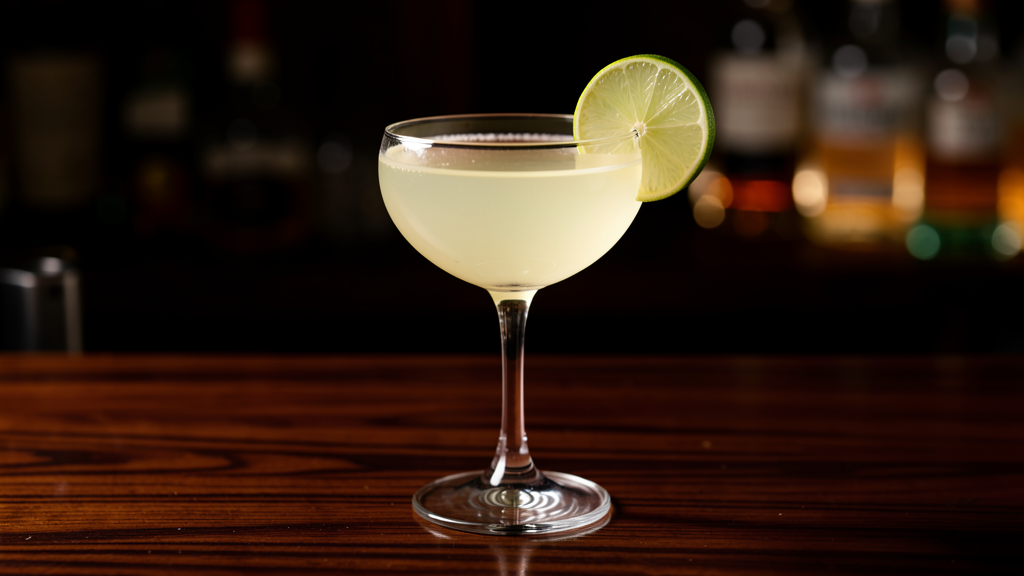
Single Serve
Shaken hard, strained into a chilled coupe. Serve immediately — the dilution and temperature are part of the drink.
Freezer-Door Batch (1L)
Pre-diluted and frozen. Lime juice added at service — it oxidizes within hours and will turn the batch muddy and flat if pre-batched. Pull from freezer, add fresh lime, shake briefly, serve.
On the Ratio
The standard modern Daiquiri is 2 oz rum, ¾ oz lime, ¾ oz simple syrup — a balanced, citrus-forward drink. It's pleasant but it doesn't taste like rum. David Embury's 1948 ratio was 6:2:1 (rum dominant), and his critique still holds: most Daiquiris don't have enough rum to make the rum worth caring about.
This version uses 2.5 oz and drops the sweetener slightly to ½ oz of rich (2:1) demerara. The demerara matters — it has molasses depth that pairs naturally with rum in a way plain cane syrup doesn't. The result is a drink where the rum is present, the lime is structural rather than dominant, and the sweetness sits underneath instead of leading. Boozy, clean, cold.
If your limes are very tart, push the syrup to ¾ oz. If the rum is particularly characterful (aged white or lightly aged), let it show — resist the urge to sweeten further.
The Flavor Arc
On the Rum
Bacardi Carta Blanca
The historically correct choice. Cox used Bacardi at the mines in 1898 because that's what engineers received as part of their compensation. Light-bodied, delicate, with a subtle saline-mushroom note that Difford's Guide describes as the defining character of authentic Bacardi. It disappears into a poorly made Daiquiri; it sings in a properly ratio'd one.
Havana Club 3-Year-Old
Dick Bradsell's preferred choice. Slightly more character than Bacardi — a hint of dried fruit and oak from the aging. Still light enough to keep the drink clean. If you can source it, worth trying side by side.
What to Avoid
Heavy-bodied aged rums (Appleton 12, Diplomatico Reserva) overwhelm the lime and make the drink muddy. Flavored rums are a different drink entirely. The Daiquiri rewards restraint in the base spirit — save the interesting rum for the glass, neat.
Natural Extensions
Hemingway Daiquiri
Add ½ oz Luxardo Maraschino and replace ¼ oz lime with fresh grapefruit juice. Drier, more complex, bittersweet. Hemingway drank his without sugar at La Floridita — the maraschino does the sweetening work. Already on the site.
The Embury
Push to 3 oz rum, ½ oz lime, ¼ oz syrup. His original 8:2:1 ratio. Extremely rum-forward, almost austere. Try it if you want to understand what a Daiquiri can be at its most spirit-driven.
Banana Daiquiri (Not Frozen)
Replace ¼ oz demerara with ¼ oz banana liqueur (Giffard Banane du Brésil). Keep everything else. Tropical without going tiki. Surprisingly serious.
The Daiquiri is the test of a bartender and a recipe. Three ingredients. No room to hide. Get the ratio right, use fresh lime, keep it cold, and it's one of the best drinks ever made.