Coquillage
Rye and coffee, bitter-edged and stirred
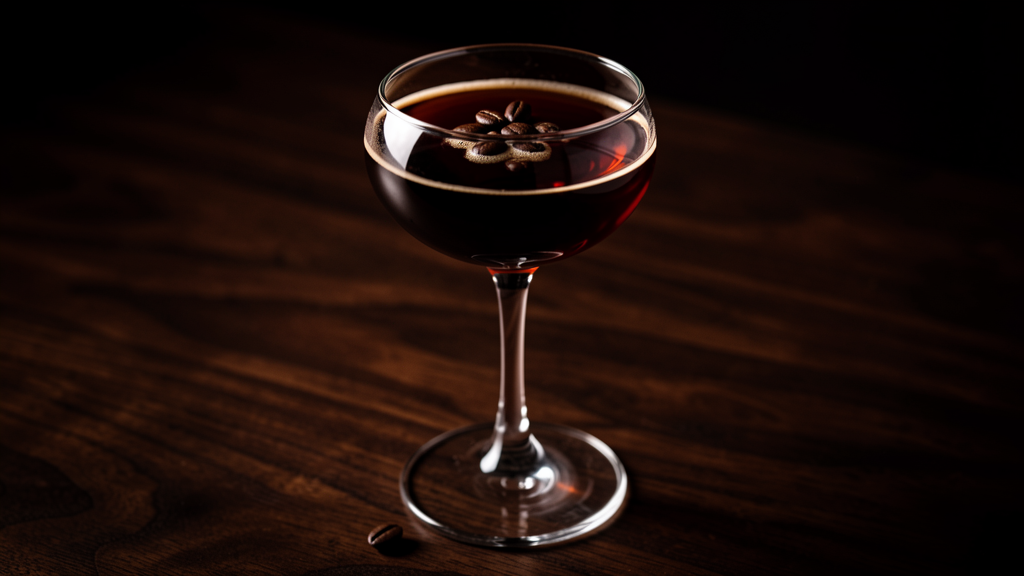
The construction reads like a problem: equal parts rye and coffee liqueur sounds like a recipe for something too sweet or too dark. The resolution is Campari. The bitterness cuts through the coffee's sweetness and the rye's grain, and chocolate bitters connect the flavors rather than adding a third flavor. What emerges is a cocktail that reads dark and complex without being heavy.
The coffee provides body, the rye provides structure, and the Campari provides the brightness that keeps it moving. Each ingredient covers what the others lack. Coffee and rye without Campari would be syrupy and one-dimensional. Campari without coffee would be the beginning of a Negroni. The chocolate bitters are not a flavor but a bridge, something to keep the three from sitting in separate rooms.
Serve it very cold. At room temperature the sweetness dominates; at freezer temperature it becomes a different drink. Temperature is not incidental here; it is part of the recipe.
Freezer-Door Batch (1L)
All stirred spirits — fully batchable. Flavors marry beautifully after 24 hours. Serve cold from the freezer over a large rock with an expressed orange twist.
Notes on Batching
This batch holds well for 2–3 weeks in the freezer. The Campari bitterness mellows slightly after day 2, integrating with the coffee. Day 1 is brighter and more assertive; day 3 is rounder.
Single Serve
Stir to order for maximum brightness. The equal-parts structure means each ingredient is fully present.
Why This Drink Exists
Equal parts rye and coffee liqueur is an unusual split — neither dominates. In most espresso-adjacent drinks the base spirit gets swamped by the sweetness of the coffee liqueur. Here, Rittenhouse at 100 proof has enough spine to hold its own.
Campari is the structural intervention. Without it this would read as a sweetened rye. With it, you have bitterness, orange, and herbal complexity pulling the drink away from dessert territory and toward aperitif.
The chocolate bitters are not chocolate-flavored in an obvious way — they add a dark earthy note that links coffee roast to rye grain. They are the reason the drink coheres rather than just coexists. Recipe by J.E. Clapham, via Alan's Bar.
The Flavor Arc
What Each Ingredient Brings
Rittenhouse Rye
Rittenhouse 100 proof is a benchmark rye — 51% rye grain, bottled-in-bond strength. That proof matters here because it's going up against two assertive modifiers.
Why this: its spice profile (clove, pepper) creates contrast against the coffee without fighting it.
Luxardo Coffee Liqueur
Made from actual espresso with a drier, more roasted character than Kahlua. Kahlua is fine but reads sweeter and more vanilla-forward.
Why this: the dryness means equal-parts doesn't tip into candy territory.
Campari
The structural backbone of this drink. Bitter, herbal, orange-forward at 48 proof.
Without Campari this is a sweet rye-coffee combination. With it, it's a proper stirred cocktail.
Bittermens Chocolate Bitters
Not overtly chocolate flavored — they add dark, earthy complexity that links the coffee roast to the rye grain character.
The bridge ingredient. Try the drink without them and notice what disappears.
Variations to Explore
Bourbon Version
Sub bourbon for rye — rounder, less spice, more vanilla-caramel. Works beautifully with the coffee liqueur. Try Buffalo Trace or Elijah Craig.
Add Fernet
Add 1/4 oz Fernet-Branca to the single serve. More herbal, minty edge. Extends the finish considerably.
Cynar Instead of Campari
Cynar is artichoke-bitter and earthier than Campari. The result is darker and more savory — the coffee reads differently against it.
Recipe by J.E. Clapham, via Alan's Bar (TikTok). Adapted for freezer-door batching.