Classic Spanish Sangria
Red wine, brandy, citrus, and a long soak. The Spanish original, scaled to a gallon.
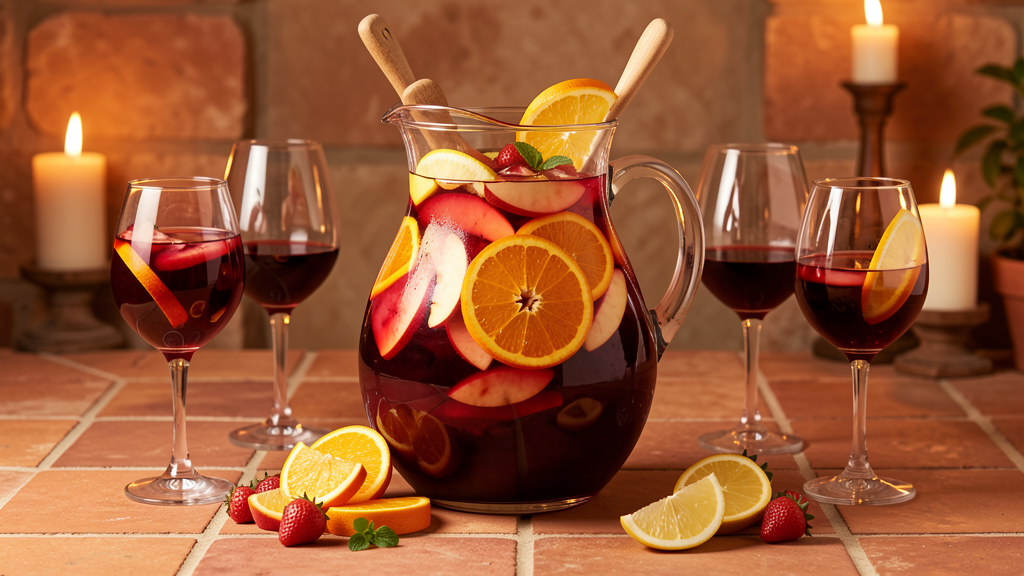
Sangria has roots in Spanish and Portuguese wine culture going back centuries -- the word comes from "sangre" (blood), a reference to the deep red color. The drink as we know it was popularized internationally at the 1964 World's Fair in New York, where Spanish pavilion bartenders served it to American crowds who had never tasted it. It became the entry point for Spanish wine culture in the United States and has been a party staple ever since. The classic template is simple: red wine, a fortifying spirit (brandy or rum), citrus juice, sliced fruit, and sugar. The fruit soaks overnight and the flavors deepen. It is a drink that rewards patience.
The 1-gallon format here is designed for a backyard gathering of 15-20 people. The ratios are scaled from the AllRecipes classic (966 ratings, 4.6/5). The only rule is to use wine you would actually drink -- cheap wine makes bad sangria.
1-Gallon Batch (Serves 16-20)
Combine brandy, OJ, and sugar first. Add citrus and refrigerate overnight. Add wine last. Do not add ice to the batch.
Notes on the Batch
Do not add ice to the batch itself -- it dilutes over time and waters down the fruit. Serve over ice in individual glasses. The overnight soak is worth it: the citrus oils release into the brandy and the flavors integrate in a way that two hours cannot replicate.
What Each Ingredient Brings
The base. Use a dry Spanish red -- Rioja (Tempranillo-dominant) or Garnacha. The wine is the majority of the liquid; use something you would drink on its own. Cheap wine makes bad sangria not because of snobbery but because wine flavor is the foundation everything else builds on.
Avoid oaked Chardonnay or anything labeled "cooking wine." Dry and fruit-forward is the target.
Spanish brandy (Torres 10, Fundador) is traditional and adds a warm, grape-distillate note that stays in the family of the wine. Dark rum works and adds a tropical edge -- slightly sweeter, with molasses and vanilla depth.
The brandy fortifies the wine and extends the shelf life of the batch.
Freshly squeezed adds brightness and acid. Bottled OJ works but tastes cooked by comparison. The OJ is doing two jobs: sweetness and citrus acid. If using bottled, reduce the simple syrup slightly.
Sliced thin into rounds, they macerate in the brandy mixture and release essential oils from the skin. This is the depth that makes sangria taste like more than wine and juice. Do not skip the soak.
Adjust to taste based on your wine. A dry Rioja may need the full 6 oz; a fruit-forward Garnacha may need less. Add, taste, and calibrate.
Flavor Arc
Ratios scaled from the AllRecipes classic sangria (966 ratings, 4.6/5). The 1-gallon format is designed for 15-20 people.