Bourbon Renewal
Bourbon sour with a blackcurrant heart
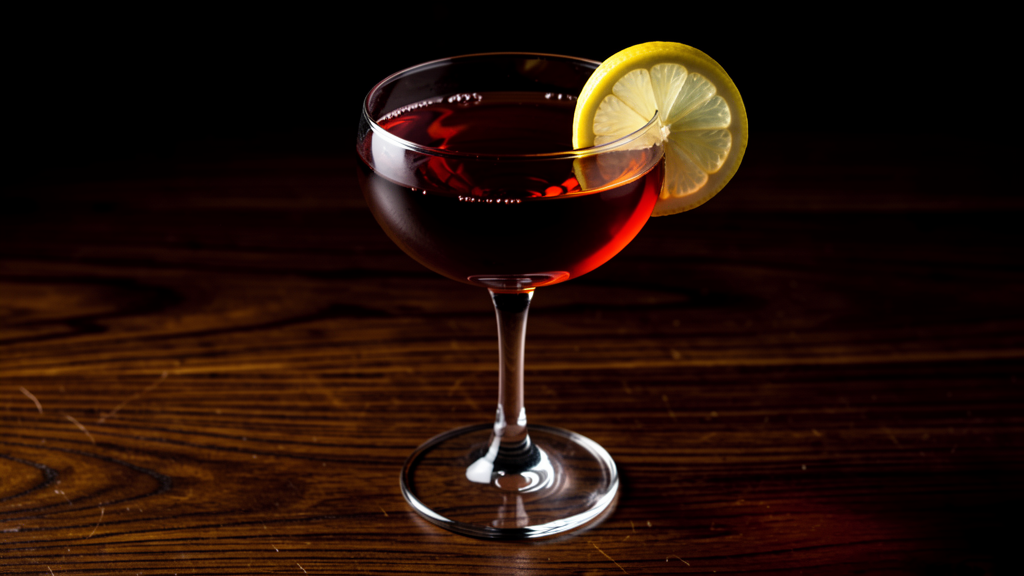
The Bourbon Renewal is a whiskey sour built with crème de cassis, a blackcurrant liqueur from Burgundy, in place of simple syrup. The substitution changes the drink's character entirely. Blackcurrant reads dark and jammy against bourbon, with a tartness that functions less like sweetener and more like a second citrus. The drink gets color, depth, and a fruit layer that standard sour syrups can't provide.
What makes it work is proportion and restraint. At a half ounce, the cassis adds fruit without taking over. More than that and it becomes a cassis drink with bourbon in it, which is a different thing. The bourbon's vanilla and oak, the lemon's brightness, and the blackcurrant's dark fruit all pull in different directions but land in balance. The result is a sour that's denser and more layered than the standard formula, and crushable in the way that more complicated drinks rarely are.
Freezer-Door Batch (spirits)
Batch the bourbon, cassis, and syrup. Add fresh lemon juice per drink at service — citrus cannot be pre-batched.
Notes on Fresh Lemon
Lemon juice oxidizes within 24 hours. Always add fresh per drink at service. The batch spirits can be made ahead — the lemon cannot.
Single Serve
Shake well. Double strain for a clean, clear drink over the large cube.
Why This Drink Exists
Creme de Cassis is the Burgundian blackcurrant liqueur — the ingredient that makes a Kir or Kir Royale. In a whiskey sour it adds a dark fruit layer that elevates the drink from simple sour to something with depth and history.
The proportion matters. At 1/2 oz, cassis adds color and fruit. At 1 oz it takes over — suddenly it's a cassis drink with bourbon in it. The restraint here is the point.
Angostura at one dash is the bridge. It connects the bourbon grain to the cassis fruit via its clove-and-spice character. Without it the drink is pleasant but slightly disconnected. Recipe by Chris via TikTok.
The Flavor Arc
What Each Ingredient Brings
Bourbon
The grain backbone. Bourbon's corn-sweetness and vanilla-oak character work with blackcurrant better than rye would.
Why bourbon over rye: rye's spice competes with cassis. Bourbon's sweetness complements it.
Creme de Cassis
Blackcurrant liqueur, traditionally from Dijon, Burgundy. The best versions use actual blackcurrant juice rather than artificial flavoring.
The fruit layer of this drink. At the right proportion it adds depth; too much and it takes over.
Fresh Lemon Juice
The acid that makes this a sour rather than a sweetened spirit drink. Essential fresh — bottled lemon juice oxidizes and tastes metallic.
Cannot be batched. Always squeeze to order.
Angostura Bitters
Trinidad-made aromatic bitters — clove, cardamom, cinnamon, gentian root.
One dash does specific work here: connects bourbon grain to cassis fruit via shared spice character.
Variations to Explore
Rye Version
Sub rye for bourbon — spicier, less sweet, more grain-forward. The cassis reads differently against rye. More tension, less harmony.
Chambord Instead of Cassis
Sub Chambord (black raspberry liqueur) for cassis. Lighter, more tart, different fruit profile. The drink becomes brighter and less dark.
Add Egg White
One egg white dry-shaken before adding ice. Transforms the texture — silky, frothy, more formal. The cassis color becomes a pink foam.
Recipe by Chris, via TikTok. Adapted for freezer-door batching.